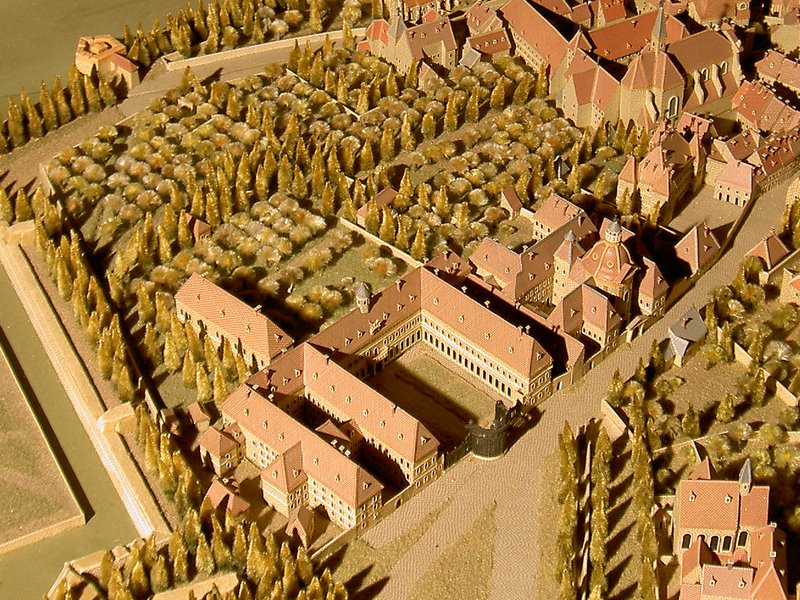
Rehabilitation of the former Pontarlier Hospital: an ambitious project for intergenerational housing
In the heart of the Haut-Doubs region, the town of Pontarlier is implementing an innovative real estate project by renovating part of its former hospital into affordable housing. This initiative, strongly supported by the municipality and implemented by the social housing provider Néolia, aims to address a dual challenge: providing suitable housing for independent seniors while creating opportunities for young professionals. The unique nature of this project lies in its intergenerational dimension, which will be embodied by two separate but complementary residences. This approach is part of the current effort to combat growing rental pressures in the border region and illustrates a modern approach to urban planning and shared housing. The former Pontarlier hospital, long unoccupied and left dormant since 2014, presented a major challenge to transform. Néolia called on the architectural firm L.A.O., led by Philippe Lamboley and his partners, to design a renovation that respects the historic architecture, recognized by the Buildings of France authorities. This unique heritage setting adds significant value to the project, combining aesthetics, functionality, and contemporary energy requirements. The building permit, approved in March, paves the way for this in-depth transformation.The originality of the project lies in a redesigned distribution of space: Le Clos de l’Hôpital will house 52 housing units perfectly adapted to the needs of the target populations. This highly anticipated project is part of a broad sustainable and inclusive urban planning strategy called Vie Nouvelle Pontarlier, whose objective is to provide quality short- and long-term accommodation for all, promoting social and generational diversity.
A true Alliage Générationsproject will take shape in this historic city center. The residence will benefit from specific developments both in terms of architecture and services offered, an approach that encapsulates the challenges of modern social housing in the Doubs region. Furthermore, you can consult comprehensive files and advice on similar senior and intergenerational residences via information platforms dedicated to
senior residences and housing for young professionals. Discover how the Pontarlier hospital is evolving thanks to major transformation works to improve patient reception, modernize equipment, and optimize healthcare. A structuring project that combines heritage, local solidarity, and housing innovation.This ambitious project is mobilizing nearly €8.5 million, including the acquisition and complete renovation of the iconic structure in the city center. The approach is clearly aligned with sustainable development, with the goal of obtaining BBC renovation certification, attesting to the buildings’ energy and environmental quality. Néolia is planning a rigorous schedule: demolition and asbestos removal starting in the second quarter of 2026, followed by major works starting in the final quarter. Delivery of the homes is scheduled for the first quarter of 2029, a significant but essential timeframe for a project of such scale and complexity.
The work consists of a complete renovation of the framework, the roof, and the restoration of the facades, while preserving authentic architectural elements such as the historic library, which will be rehabilitated to serve as a common room for the residence for young professionals. This fusion of old decor and modern features perfectly illustrates the « Horizon Seniors & Jeunes » dynamic that the project aims to foster in the community. Beyond the renovation, this project addresses a vital socio-economic challenge: how to harmoniously integrate populations with very different and sometimes conflicting needs? The Pontarlier Shared Housing project is both a pragmatic and visionary solution, paving the way for sustainable housing development in areas where availability and affordability are increasingly scarce. The implications for the area are numerous, ranging from greater economic attractiveness for young talent seeking affordable housing to an enhanced quality of life for seniors wishing to maintain their independence. This project is also documented as part of innovative trends in intergenerational housing, which can be regularly found on societal and economic analysis platforms dedicated to innovation 2025 .

The senior living residence will feature 24 modern social housing units designed to meet the specific needs of an aging population wishing to maintain their independence. These units range from one-bedroom to two-bedroom apartments, with rents ranging from €224 to €715 per month excluding charges. Each unit features features to facilitate daily living: electric shutters, showers accessible to people with reduced mobility (PRM), and grab bars. These technical improvements are essential to provide comfort and safety without sacrificing aesthetics.
In addition, the regular presence of a hostess several half-days per week creates social connections and enlivens the life of the residence. She also offers administrative support to assist senior residents with their administrative procedures. The objective is clear: to enable them to remain in a safe environment, with appropriate activities without the risk of isolation. This type of housing marks an evolution in the design of senior housing, combining independence with light support, a formula that echoes what is now called the Intergenerational Residence.
The trend toward keeping seniors in their living environment as independent as possible is also part of a local economic approach, with the aim of avoiding early hospitalizations or the need for more expensive facilities. Furthermore, this model promotes social diversity by sharing the same overall space with a residence for young professionals, which enriches the daily lives of both populations.The concept is part of a respectful and innovative approach, widely documented in analyses of senior housing integrating modern technology and services.for greater comfort. These initiatives are part of a broader effort to adapt medium-sized towns to the growing needs of an aging population.
For seniors, the project offers an optimal quality of life in a historic location steeped in emotion and history, strengthening their sense of belonging to the Heart of Pontarlier . The goal here is to combine heritage and modernity in a lively and welcoming setting.
Housing for Young Professionals: An Innovative Offer in Shared Housing Faced with the difficulties encountered by young people in the Haut-Doubs region in finding affordable housing, the project to transform the former hospital into a residence for young professionals provides a concrete and appropriate solution. The section dedicated to young people will include 28 furnished apartments, mostly one-room apartments with a few two-room and two-room apartments, financed through a social rental loan. Rent will be around€12 per square meter
of usable floor space, with monthly payments ranging from €224 to €515 excluding charges.
These specially tailored conditions are aimed at people under 30 years of age with defined income criteria. The idea is to facilitate access to housing, which is often difficult in an area marked by high rental pressures due to its proximity to Switzerland, an area attracting many cross-border commuters. In addition to the comfort of the apartments, the residence will feature communal spaces, including the common room housed in the former library, which has been carefully renovated to preserve architectural details such as historic woodwork.
This framework not only promotes a place of residence, but also a place for social life and mutual support, crucial for young professionals who are often starting their careers or continuing their studies. They will benefit from a dynamic environment while remaining at the heart of an urban environment that blends different generations. This is reflected in similar, increasingly popular initiatives, often referred to as « Senior & Youth Together » or « Intergenerational Housing, » which bring together diverse and complementary audiences in a single dynamic. For local economic stakeholders, this project is also a lever of attractiveness, helping to retain young talent seeking a pleasant living environment without sacrificing their budget. It has been observed that this type of offering can also support local economic growth by facilitating access to stable employment. Among the resources to consult to better understand this trend, we can follow the analyses of the « Economics & Finance Guide, » which explores trends in social housing and public policies aimed at harmoniously integrating young people and seniors into residential housing. Territorial Impacts and Outlook: A Replicable Model for Medium-Sized CitiesThe hospital renovation project into a Pontarlier Residence is part of a sustainable local development approach. Beyond the immediate impact on housing supply, this type of program helps revitalize the city center and limit urban sprawl. It enhances an often underutilized built heritage, provides a social response to intergenerational issues, and stimulates the local economy.
On an economic level, the measure is exemplary of a strategy of social diversity in housing which responds to the tensions of the rental market, particularly in disaster-stricken or changing areas. The collaboration between the city, the Department, the State and a lessor like Néolia illustrates the importance of institutional and private partnerships to carry out such projects. It is possible to deepen this vision by consulting studies on housing strategies in border and rural areas highlighted in specialized articles such as those on
shared housing . Socially, the creation of housing adapted to independent seniors contributes to preventing isolation and encouraging staying at home, while the residence for young workers offers a concrete solution to the exodus of young people, particularly in medium-sized towns. The mix of generations creates an enriched social and cultural fabric, which can be seen as a true laboratory of territorial cohesion.
Finally, this project is also an example for other communities faced with similar issues: promoting ancient heritage, reconciling conservation and progress, offering New Life Residencesto mythical places. The transformation of the Clos de l’Hôpital thus lays the foundations of a reproducible and modular model which draws on local experience to invent the habitat of tomorrow.
To go further, several documentary resources around the energy transition in old buildings, the organization of intergenerational residences and innovative solutions to reduce your energy bill are available on specialized sites, in particular on the platform dedicated to
reduce energy bills in old habitat. Cultural initiatives and innovative services: liven up the social life of residents
One of the key aspects of the Horizon Seniors & Youth project is the attention paid to quality of life and the liveliness of the residences. Balancing independence, social life, and services is at the heart of the planned developments. The former historic hospital library, repurposed as a common room for young people, symbolizes this desire to blend the past and the modern.
For seniors, the presence of a hostess several days a week aims to create social connections, lead workshops, and offer assistance with administrative procedures. This role, essential in combating loneliness and maintaining social ties, is part of a broader trend toward residences offering genuine human support, well beyond simple housing. These solutions are being studied and developed in numerous European models, even inspiring French public policies on adapted housing. Young people benefit from flexible spaces where they can organize community events, workshops, or professional meetings. This dynamism contributes to the neighborhood’s vitality and helps break the isolation often felt in this type of student or temporary housing. The approach is intertwined with smart city policies, where technology and community life reinforce each other. Furthermore, the renovated environment will also promote the integration of modern digital devices to optimize energy management and improve apartment comfort. Similar experiments are being observed nationwide in intergenerational residences where smart housing is combined with social and cultural initiatives, which can be explored in more detail in articles on artificial intelligence applied to community spaces. Thanks to this model, social life becomes a central pillar, combining heritage, conviviality, and innovation. The Pontarlier Intergenerational Residence is thus part of a process where housing becomes a true vector of social connection, mutual support, and cultural exchange between Seniors & Young People Together.
Ne manquez rien !
Recevez les dernieres actualites business, finance et lifestyle directement dans votre boite mail.