Strengthening Your Writing with Spell Checkers: A Must-Have in 2025
In a professional and academic world where writing remains a key communication tool, mastering spelling is crucial. More than half of HR managers reject applications due to spelling errors, according to a recent survey published by Le Parisien. This finding highlights the direct impact of mistakes on the credibility of an individual or an organization.
Yet, paradoxically, proficiency in the French language is declining. A study conducted by Projet Voltaire reveals that the average French person only masters 45% of spelling rules today. This figure, which is constantly decreasing, reflects a profound educational challenge. Faced with this trend, using a suitable spell checker becomes a practical and effective solution for improving the quality of your writing.
Spell checkers are not limited to simply detecting errors. When used correctly, they constitute a valuable educational tool, helping users understand errors and improve sustainably. Leading solutions in 2025 include Antidote, Scribens, BonPatron, Cordial, Reverso, LanguageTool, Grammalecte, ProLexis, Le Robert Correcteur, and SpellBoy. Each offers specific features tailored to different needs: grammar correction, style suggestions, integration with various platforms, and learning tools.
The user experience plays a key role in choosing a proofreading tool. An intuitive interface and clear explanations of errors promote rapid learning while ensuring a smooth experience. For example, Scribens is renowned for its detailed explanations that transform each correction into a personalized lesson.
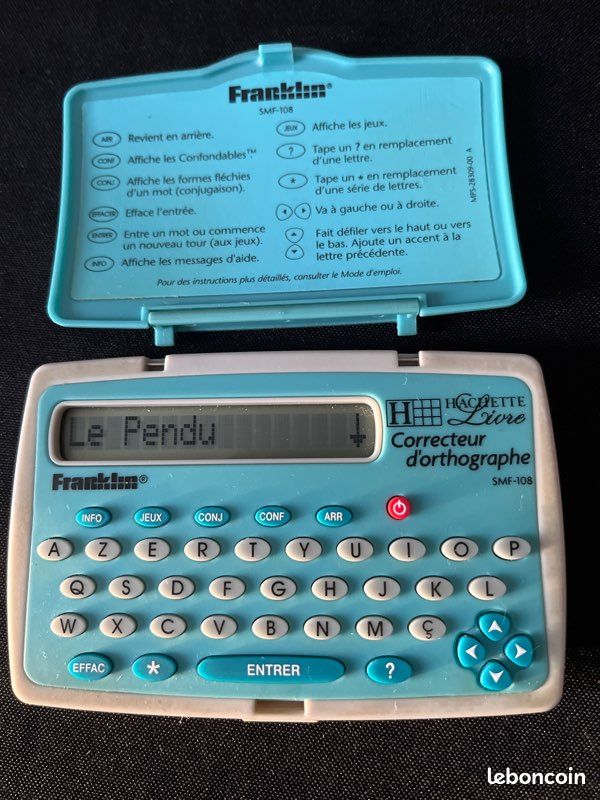
Improve your texts with our online spell checker: instantly detect and correct mistakes for professional, error-free writing.
Choosing and effectively using an online spell checker to boost your writing
The spell checker market has become widely accessible, offering both free and paid solutions tailored to different user profiles. Antidote remains the leading professional option, offering a comprehensive range of tools from correction to stylistic analysis. In the free market, Scribens stands out with its highly accurate correction accompanied by explanations that help avoid recurring errors. To use these tools successfully, a proactive approach is essential. Simply highlighting errors is not enough. A good practice is to analyze each suggested correction to understand the underlying rule. This process transforms correction into learning and prevents the same mistake from being repeated in the future. The integration of spell checkers into common writing environments, such as Microsoft Word, Google Docs, and email platforms, facilitates real-time correction. LanguageTool, with its browser extensions, enables seamless correction when writing emails or social media posts.
Another crucial aspect is the use of writing assistants integrated into certain software, such as MerciApp and its AI assistant MAIA. These systems go beyond basic correction by offering suggestions on tone, structure, and text fluency, ideal for digital entrepreneurs and professionals concerned about their written image.
In short, knowing how to choose your spell checker and adopting a reflective approach to suggested corrections guarantees rapid and lasting skill development in the art of writing. This dual approach, combining technology and pedagogy, has become essential for thriving in an increasingly demanding professional world.
Developing your writing skills: why handwritten exercises and methods remain a sure bet
Despite the power of automatic spell checkers, manual practice remains a valuable method for mastering spelling and grammar rules. Regularly completing targeted exercises helps solidify acquired knowledge and identify recurring personal challenges. Among the resources to prioritize are books like « 100 Days to Stop Making Mistakes » by Bénédicte Gaillard, which offers progressive daily practice.
It’s also beneficial to incorporate mnemonic techniques into your learning. Authors such as Sandrine Campese recommend using drawings and images to visualize the words to be spelled. This approach engages visual memory more effectively and facilitates long-term memorization. If you prefer traditional methods, creating a personal logbook that compiles your frequent mistakes along with mnemonic tips remains a good practice.
A key element is formal skills upgrading, through certifications like the Voltaire Project or the Bescherelle certification, both accessible online and eligible for CPF funding. These programs combine engaging training with recognized validation, enabling structured and valued progress in the professional world.
The use of dedicated mobile applications, such as Mon Coach Bescherelle or the Voltaire Project app, effectively complements this approach. These applications offer content tailored to the user’s level, with interactive exercises allowing progress anytime, anywhere.
Finally, to boost spelling skills on a daily basis, Netflix and YouTube now offer educational channels. For example, « Ma petite leçon de français » by Aurore Ponsonnet or Valérie Strohmenger’s educational channel address common pitfalls in a simple and often humorous way, enriching learning in a fun manner.
Leveraging Intelligent Proofreading and the PHARE Method for In-Depth Manual Editing
Technology cannot completely replace the human eye, especially when it comes to refining stylistic nuances and detecting subtle errors. The PHARE method stands out as a powerful technique, geared towards a vigilant proofreading of your texts. It structures the work into several stages: Sentence, Homonyms, Agreement, Proofreading, Elegance. This systematic approach helps to scan the text with rigor and precision.
The first stage involves analyzing the syntax of each sentence, ensuring that it clearly conveys a single idea. Examining homonyms requires avoiding common pitfalls such as « ces » / « ses, » « voir » / « voire, » or « a » / « à. » This vigilance is crucial because these confusions often hinder comprehension.
Agreement is the next step, and a major source of errors. Whether it’s agreement within the noun phrase or the verb, particular attention is required. For example, the agreement of the past participle with the auxiliary verb « avoir » always depends on the position of the direct object, which necessitates careful proofreading.
This proofreading aspect is reminiscent of best practices: choosing a quiet environment, reading sentences backward to disrupt habitual logic, or changing the font and font size to uncover errors hidden by familiarity with the text. These techniques call for a different kind of perception, detached from meaning to focus on form.
Finally, to enrich style and increase the impact of the message, the « Elegance » step recommends using logical connectors, diversifying vocabulary with a dictionary (such as Le Robert or Larousse), and eliminating repetitions. When applied regularly, the PHARE method becomes an effective reflex for refining both professional and personal writing.
Ne manquez rien !
Recevez les dernieres actualites business, finance et lifestyle directement dans votre boite mail.