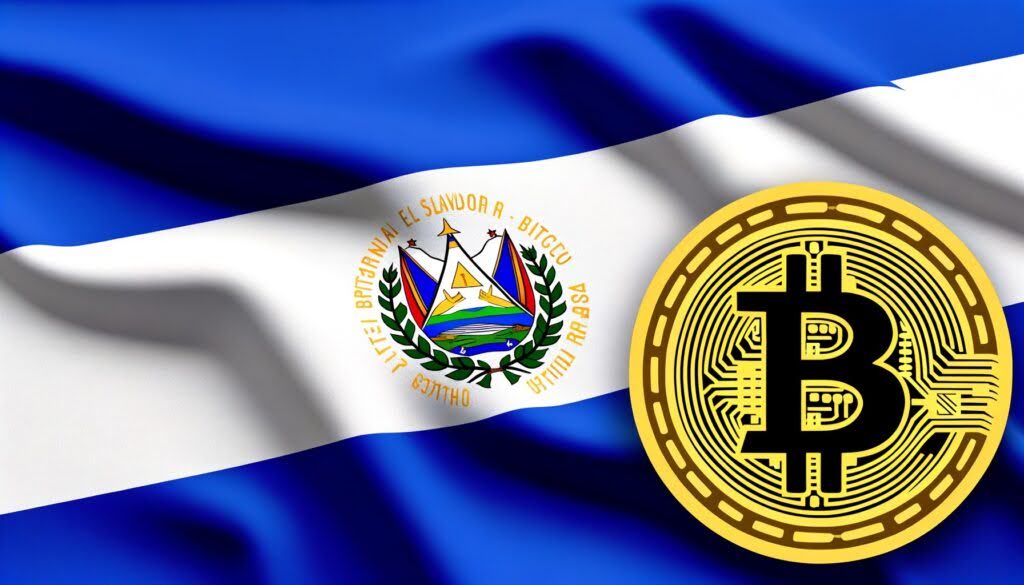
Since the historic adoption of Bitcoin as legal tender in 2021, El Salvador continues to revolutionize its financial framework with a bold approach integrating cryptoassets into its banking system. In 2025, the recent reform of the banking legislation paves the way for a profound transformation, authorizing investment banks to offer innovative services around Bitcoin and other digital assets. This development offers major new opportunities, particularly in bank loans and Bitcoin deposits, while strengthening the country’s position in global digital finance. The Foundations of El Salvador’s New Bitcoin Banking Legislation The reform adopted by the National Assembly of El Salvador marks a key milestone by officially integrating investment banks into the cryptoasset market. Under the strict supervision of the Central Reserve Bank (BCR) and the Financial Supervision System (SSF), these banks can now offer comprehensive services related to Bitcoin: trading, management, custody, and issuance of digital assets. This progress confirms the country’s commitment to anchoring cryptocurrency in its economic fabric by providing a secure and regulated framework. A central point of this legislation is the establishment of an access threshold targeting sophisticated investors. Only individuals or companies with at least USD 250,000 in liquid assets may interact directly with these products. This mechanism aims to ensure a certain financial maturity of stakeholders, while avoiding excessive exposure of small savers to the volatility of crypto markets. Furthermore, investment banks now have the right to issue their own native tokens, giving rise to a new generation of blockchain-based financial products. This approach, although conservative in risk allocation, opens up a multitude of new possibilities for El Salvador’s traditional and digital banking ecosystem. The banking sector is thus adapting to the requirements of modern financial regulation, reconciling innovation and investor protection. For example, banks can now structure loans in Bitcoin, facilitating access to credit for companies willing to integrate cryptoassets into their business model. The Salvadoran experience stands out in that it no longer simply imposes the mandatory use of Bitcoin for everyday transactions, but also creates a true financial services environment around this digital currency. This change corresponds to the country’s growing maturity in the integration of digital finance, in line with international standards, particularly in a context of strengthened cooperation with the International Monetary Fund (IMF). Discover the banking legislation surrounding Bitcoin in El Salvador: an overview of the rules, implications, and impacts of adopting Bitcoin as legal tender in the country. Impact of Bitcoin Bank Loans on the Salvadoran Economy With the formal integration of cryptoassets into banking products, El Salvador is creating a new paradigm forbank lending
. The ability for investment banks to offer loans guaranteed or denominated in Bitcoin represents a major innovation. This measure can transform the local economic dynamic by facilitating the financing of companies and innovative projects that rely on blockchain.
For example, a tech startup based in San Salvador can now apply for a Bitcoin loan to finance its development, benefiting from both the liquidity of the crypto market and regulated banking services. This situation illustrates how innovative banks are redefining their offerings to meet the growing demand for digital assets, while minimizing the risks associated with price fluctuations through tailored hedging mechanisms. Furthermore, this Bitcoin lending model can also attract foreign investors seeking an alternative to traditional financial systems. The ability to use digital assets guarantees greater flexibility and speed in transactions, a crucial aspect in a globalized world where financial flows must adapt quickly to needs. However, it should also be noted that this advancement imposes significant risk management requirements for banking institutions. The inherent volatility of cryptocurrencies requires sophisticated tools and specific skills to ensure that the loans granted remain viable and secure. Salvadoran banks are therefore investing heavily in data analytics technologies and artificial intelligence solutions to manage these risks.
Beyond lending, this new legislation also encourages the emergence of a greater supply of Bitcoin depositsamong individuals and businesses with substantial liquid assets. This mechanism allows for the diversification of financing sources and savings while benefiting from the potential growth of Bitcoin, thus supporting the modernization of the local financial system.
Bitcoin Deposits: Evolution of Trust Mechanisms and Outlook The ability for investment banks to accept Bitcoin deposits represents a turning point for investor confidence in the stability and credibility of the cryptoasset market. By providing a clear and monitored regulatory framework, El Salvador is significantly reducing perceived risks and positioning its banking system as a regional model. In reality, these deposits are not simply passive investments. They actively contribute to the creation of solid digital reserves, strengthening banks’ ability to offer loans and support large-scale projects. Blockchain, through its transparency, also enables rigorous monitoring of flows, increasing traceability and limiting fraud. A notable example is the local startup Finance4All, which recently opened a Bitcoin deposit account with a Salvadoran investment bank. Thanks to this deposit, the company has improved its solvency and accelerated international partnerships, demonstrating that innovative banks know how to leverage cryptoassets to boost the economy. But the integration of Bitcoin deposits also raises regulatory challenges. Compliance with international standards on anti-money laundering and combating the financing of terrorism is becoming a priority. El Salvador is therefore working closely with regulatory bodies such as the IMF to adapt its processes, notably through regular audits and increased transparency in the management of digital assets. As a result, this legislation not only offers a new source of capital, but also revolutionizes the relationship between citizens and financial institutions. We are seeing a gradual democratization of financial products based on cryptocurrencies, although, for now, this offering remains reserved for the most experienced players.
New International Dynamics: El Salvador and Global Digital Finance While the debate over Bitcoin’s place in the global economy remains heated, El Salvador is establishing itself as a unique case study by massively integrating cryptocurrency into its banking mechanisms. The country thus intends to position itself as a hub for innovation aroundcrypto-assets
This commitment is perfectly illustrated by the international agreements recently signed with nations such as Pakistan, aimed at strengthening cooperation in the field of blockchain and digital finance. El Salvador thus benefits from a transfer of expertise while exporting its innovative regulatory model. These partnerships provide increased credibility, essential for attracting institutional investors and institutionalizing the widespread use of Bitcoin.
Furthermore, the modernized regulatory framework allows El Salvador to comply with the requirements of major international financial institutions, paving the way for a form of regulation compatible with global standards. Nevertheless, tensions with certain bodies such as the IMF, which has imposed restrictions on the use of Bitcoin as legal tender, remain present and shape the country’s economic trajectory. Despite these challenges, Salvadoran policy continues to advocate for the continued adoption of Bitcoin, supporting its innovative banks and promoting the development of digital finance.This strategy could well inspire other countries seeking to boost their banking systems through the opportunities offered by digital assets.
Regulatory Challenges and Future Prospects for Bitcoin Banking Legislation in El Salvador
Despite substantial progress, El Salvador’s Bitcoin banking framework remains subject to significant challenges, particularly on the regulatory front. Following the controversial agreement with the International Monetary Fund, the country had to adjust certain practices, including ceasing to impose Bitcoin as a mandatory means of payment and limiting the accumulation of Bitcoin reserves. These constraints have hampered the initial ambition, even though the government claims to maintain its long-term commitment.
Transparency of Bitcoin reserves is a thorny issue. Local critics have questioned the actual accounting of assets held, highlighting a lack of tangible evidence corroborating official statements. The debate surrounding the legitimacy of crypto-asset holdings requires increased vigilance to ensure the confidence of both domestic and foreign investors. Furthermore, the complexity of monitoring and controlling cryptoassets requires continued skill development on the part of financial authorities. Indeed, the success of this new legislation depends on firm and adaptable regulation, capable of keeping pace with the rapid evolution of blockchain technologies while ensuring user protection.
Furthermore, the potential emergence of banks entirely dedicated to Bitcoin, still in the planning stages, could disrupt Salvador’s traditional banking system, offering an alternative focused exclusively on cryptoassets. Such a model would encourage innovation, but also requires exemplary regulatory robustness to avoid systemic risks. Finally, El Salvador’s ambitions in the field of digital finance
are part of a global competition where the ability to balance innovation and regulatory certainty will be decisive. The country remains at the forefront of a transformation that could redefine banking standards for years to come.
To support this transition, local and international economic players are advised to seek appropriate expertise, such as that offered by firms specializing in accounting and digital finance. For example, the website E-Zoom.biz provides valuable resources to better understand the tax and accounting implications of digital assets in a real estate and financial context.
Ne manquez rien !
Recevez les dernieres actualites business, finance et lifestyle directement dans votre boite mail.