In a digital world that increasingly complicates security and freedom of access to information, choosing a high-performance, reliable VPN has become essential for demanding internet users. ExpressVPN is establishing itself as a leading provider in 2025, praised for its exceptional speed and robustness in the face of geographic restrictions and cyberthreats. Through this in-depth analysis, we examine its strengths, technical intricacies, and limitations compared to competitors like NordVPN, CyberGhost, and Surfshark, to provide a clear and nuanced overview for users ready to take the leap towards secure, seamless, and comprehensive browsing.
ExpressVPN: Advanced Security Architecture for Enhanced Privacy
ExpressVPN’s reputation is based above all on a rigorous security policy combined with cutting-edge technology. At a time when personal data protection has become a major issue, this service relies on military-grade AES encryption and a system of encryption keys renewed every fifteen minutes, ensuring perfect confidentiality even in the event of a one-off breach. This technique, known as « Perfect Forward Secrecy » (PFS), constitutes a valuable shield against digital espionage, whether by internet service providers, public Wi-Fi network administrators, or malicious actors.
Another fundamental aspect is protection against IP and DNS leaks. ExpressVPN automatically integrates protocols that block all leaks, thus reinforcing the isolation of data exchanged online. The « Network Lock » feature, or kill switch, is also crucial for immediately interrupting the internet connection in the event of a VPN connection loss, preventing any accidental exposure of sensitive data. This proactive approach to security often outpaces that of many direct competitors such as Private Internet Access or VyprVPN.
In the area of VPN protocols, ExpressVPN offers its own tunnel, Lightway, synonymous with optimization without compromising speed and data integrity. Compared to the often-praised WireGuard, Lightway boasts superior performance, particularly on iOS and macOS, with seamless network transitions and remarkable stability. In addition, OpenVPN and IKEv2/IPSec options remain available for users requiring greater flexibility, an advantage over some providers limited to one or two protocols. ExpressVPN also enhances its offering with a suite of advanced tools, including an ad and tracker blocker called Threat Manager and configurable parental controls. This panel isn’t limited to privacy; it aims to improve the overall experience and control over your browsing. To complement this, the integrated password manager, ExpressVPN Keys, allows for centralized login security, a rare luxury in the segment. These combined elements give it a solid position in a market where transparency and security are becoming key criteria for savvy users.
Discover our full ExpressVPN review: performance, security, speed, and value for money. An objective analysis to help you choose the best VPN in 2024.
The strength of a VPN also depends on the quality and diversity of its server infrastructure. ExpressVPN currently achieves a wide network coverage with machines located in 105 countries and 160 cities. This global coverage exceeds the average of many competitors, facilitating fast and stable access to geo-restricted content anywhere in the world. This strategic deployment is based on « TrustedServer » technology, where data is stored only on temporary RAM, erased at each restart, ensuring no traces on the server itself. This architecture also contributes to the intrinsic confidentiality of the service, avoiding the retention of logs or personal information, a requirement reinforced by ExpressVPN’s headquarters in the British Virgin Islands, a territory outside the jurisdiction of major international surveillance alliances. Furthermore, the « IP Shuffle » function reinforces this security, by changing the IP address with each new browsing activity, which significantly complicates tracking by third-party sites.
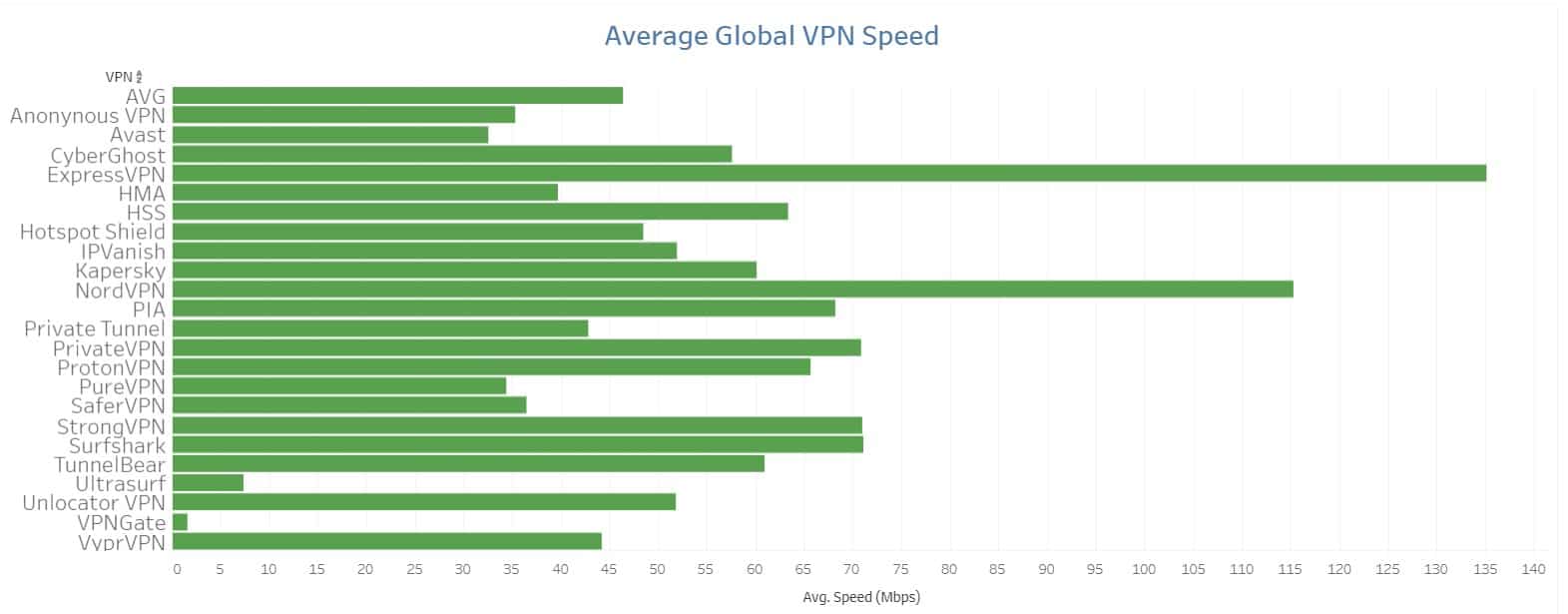
In 2025, performance remains a determining factor. ExpressVPN often leads the rankings for its ultra-fast speeds, particularly thanks to its Lightway protocol. In tests conducted from South Africa, connections to North America, Europe, Asia, and Australia maintained an average of over 80% of their initial speeds, a feat in the VPN industry where speed reductions are commonplace. This allows for a variety of uses: high-definition streaming, low-latency online gaming, and large data transfers without constraints.
This balance of speed and security is widely appreciated by subscribers who want a seamless experience for unblocking Netflix, Disney+, or ESPN catalogs, the platforms known to be the most restrictive when it comes to VPNs. ExpressVPN effectively competes with NordVPN and CyberGhost, while Surfshark appeals more to value-for-money enthusiasts. This diversity of options on the market benefits users, who can choose according to their specific needs, but ExpressVPN maintains a notable lead in terms of reliability and consistent performance.
Performance and Speed: Tests Measured in Real-World Conditions
Studies conducted on speeds and latency confirm ExpressVPN’s superiority in demanding contexts. Its Lightway protocol allows for near-transparent speeds, with marginal drops even over long distances. For example, a connection to a server in New York from a location in sub-Saharan Africa shows only a 16% reduction in download speed, while latency remains acceptable for most interactive uses.
For video games, this translates into fast responses on PlayStation and Xbox consoles, or via cloud gaming services. The ability to find servers with a ping below 150 ms ensures smooth online competitive gaming, avoiding the frustrations of lag. These technical criteria are essential compared to alternatives like Hotspot Shield or TunnelBear, which face limitations in this segment.
User Experience and Compatibility: Simplicity at the Heart of the Service
ExpressVPN’s success is also due to its remarkable ease of use. Its simple installation, whether on Windows, macOS, Linux computers, or iOS and Android mobile devices, makes it accessible even to beginners. The ability to use an activation code without a password enhances its practicality. Saving favorite servers also saves time during repeated connections. For devices where direct VPN installation is impossible, such as Roku or some Samsung TVs, ExpressVPN offers MediaStreamer, a smart DNS that bypasses restrictions without encrypting data. This dual approach offers a pragmatic compromise between access to information and security, a feature few providers can match.
The VPN is compatible with a wide range of devices, including game consoles (PlayStation, Xbox, Nintendo Switch), smart TVs, and Chrome, Firefox, and Edge browsers via lightweight extensions. Add in 24/7 support from a knowledgeable and responsive team, and the service clearly stands out in a world where support responsiveness is often a weak point among competitors.
Note that the new pricing plans offered in 2025 introduce several subscription tiers with progressive features: Basic, Advanced, and Pro. Each of these tiers adjusts the number of simultaneous connections, password manager integration, and specific protections, including identity monitoring for advanced options. This pricing structure aims to better accommodate diverse needs and budgets, a strategy also adopted by Surfshark and NordVPN.
Limitations, Prices, and Alternatives: How Does ExpressVPN Position in 2025?
While ExpressVPN impresses with its technical features and quality of service, a few points make its pricing positioning sometimes controversial. The Pro plan, while extremely comprehensive, is significantly more expensive than some competitors like Surfshark or ProtonVPN, which offer competitive packages that often include additional services such as built-in antivirus tools or unlimited device connections. The Basic plan, starting at $3.49 for twenty-eight months, while appealing on paper, excludes certain major features such as a password manager or advanced protection against malicious content and trackers. This segmentation may confuse users looking for a comprehensive and consistent service at a reasonable price. The price/quality ratio therefore deserves specific consideration depending on the user profile and personal needs.
On a technical level, some slowdowns are sometimes noticeable when switching servers, with connection delays that can reach up to ten seconds. While this doesn’t affect the day-to-day experience, it contrasts with the fluidity offered by rivals such as NordVPN. Furthermore, features such as split tunneling are not yet available on all platforms, particularly iOS and macOS, somewhat reducing flexibility of use.
For internet users looking for a serious free alternative, ProtonVPN remains a viable option, albeit with limitations in terms of the number of connected devices and geographic selection. Casual users or those wishing to try it out without obligation can also take advantage of ExpressVPN’s 30-day money-back guarantee, a welcome boost to secure their investment.
Ultimately, ExpressVPN maintains its leadership position in the premium segment, justifying its positioning with advanced technology and a polished user experience. Compared to cheaper providers like Mullvad, Private Internet Access, or Hotspot Shield, it offers a unique blend of speed, security, and simplicity, although price remains its main obstacle to wider adoption.
Ne manquez rien !
Recevez les dernieres actualites business, finance et lifestyle directement dans votre boite mail.