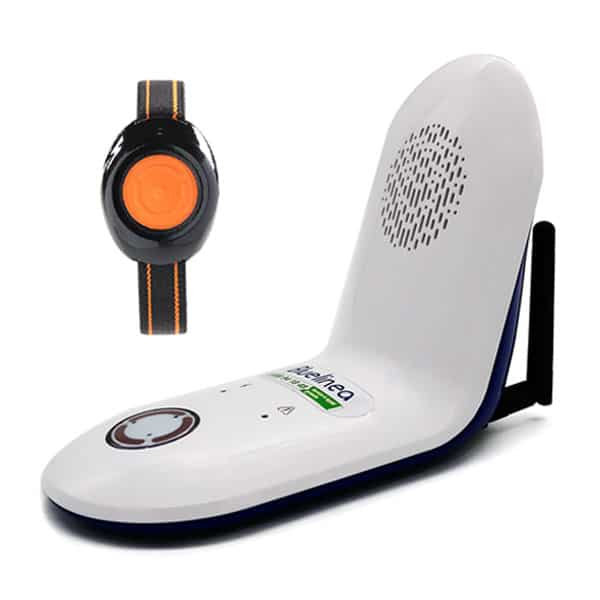
Telecare as a Cost Reduction Lever in Senior Living Facilities
Faced with the ever-increasing costs of managing senior living facilities, integrating telecare is emerging as an innovative and pragmatic solution. Adopting a telecare system allows for operational cost reduction by decreasing staffing levels while maintaining optimal service levels. Senior living facilities, such as those studied in the sector, particularly in the Haute-Loire region, have already begun to see significant savings thanks to this technology. The mechanization and digitalization of services for the elderly have introduced a new balance in the operation of these facilities. The deployment of systems such as EconomeCare and TéléSérénité has revolutionized daily management. These systems facilitate remote monitoring, reduce the need for constant human presence for emergency calls, and increase the capacity for rapid intervention without requiring a large number of on-site staff. The delivery of a secure service via remote assistance also comes at a time of economic strain. Residence management teams are indeed forced to control their senior budgets while ensuring comfort and safety. Partially replacing staff through the use of these new technologies allows them to save on salary costs and reduce the recurring deficits observed in some facilities. For example, at the Le Soleil d’Or residence in Saint-Maixent-École, a similar strategy helped to reduce a significant annual deficit of up to €80,000.
Beyond the immediate savings, the integration of remote assistance also optimizes the efficiency of the residence. Because it adapts human presence to the actual needs of seniors, avoiding unnecessary interventions. This dynamic is accompanied by a better match between human resources and the profiles of residents, particularly those requiring less intensive monitoring. Another tangible example is the implementation of remote assistance in residences observed in the Auvergne-Rhône-Alpes region, where the combination of staff and technical solutions ensures a better quality of life for seniors while optimizing operating costs.
Discover remote assistance for seniors: a reliable and secure service to guarantee the safety and independence of elderly people at home, with assistance available 24/7. How remote assistance transforms staff organization in senior residences The transformation of the staff role in senior residences thanks to remote assistance is profound. This technology is not limited to a simple replacement of staff but reconfigures all the professions related to the safety and well-being of residents. Initially, often costly positions requiring continuous staffing can be redesigned by integrating smart tools such as
SeniorÉcoService orAssistaCoût
.

Modern remote assistance tools often come with intelligent interfaces that centralize residents’ medical and social data. This innovation allows for more precise team management and ensures better coordination, leading to significant savings in the medium term. Facilities that adopt this approach, such as the residence in Saint-Lary, reap considerable benefits in operational efficiency.
Furthermore, the time saved by reducing repetitive or administrative tasks allows staff to refocus on high-value-added services. Sometimes, less specialized jobs can give way to more strategic roles, focusing on prevention, training, or social innovation, thus boosting the overall quality of life in the residence. This hybrid model, combining remote assistance and a new human organization, reflects the growing trend toward resource-optimized solutions, exemplified by platforms like OptiPrésence. It also enhances the attractiveness of these professions in a sector historically facing recruitment challenges. Financial aid and regulatory frameworks supporting the growth of telecare in senior living facilities
The increasing use of telecare in senior living facilities is accompanied by an institutional framework that encourages its adoption. Several financial aid programs are available to ease the financial burden, such as the Personalized Autonomy Allowance (APA) for home care, and even subsidies from pension funds or local authorities.
This financial support is crucial, as installing advanced systems requires a significant initial investment. However, these costs are largely offset by a reduction in ongoing expenses, particularly personnel costs. Platforms like TéléAssisteFacilealso guide managers through the application process with valuable technical and administrative expertise.
For example, in some municipalities, the local council encourages the deployment of these systems as part of local policies to improve senior housing, thus promoting safe aging in place. Concrete examples of this commitment can be found in several projects that can be explored by monitoring municipal initiatives across France.
Furthermore, the quality and safety standards for equipment are rigorously regulated, ensuring that the telecare deployed in these facilities meets health and safety requirements. These regulations provide a reassuring framework for families, professionals, and the residents themselves. Finally, legal frameworks also promote the structuring of the sector, notably by encouraging residences to integrate both modular and standardized solutions, which allows for better resource management and supports the overall cost reduction policy.
Residents’ and their families’ perceptions of the partial replacement of staff by remote assistanceMore than just a technological innovation, remote assistance profoundly changes human interactions in senior residences. The legitimate question that arises is that of acceptance, both by residents and their loved ones. The introduction of tools such as
AlloÉpargne often occurs in a context where seniors wish to maintain a certain level of independence without sacrificing their safety. Experiences gathered from pioneering facilities show that educational support is essential to fostering this adoption. By explaining the concrete benefits to residents, such as rapid intervention and 24/7 availability, it is possible to transform the fear of reduced human contact into increased confidence in the system.
Furthermore, families play a key role. Their involvement in choosing solutions and their regular updates reinforce the feeling of security. The digital interface accessible from their homes, combined with real-time alerts, offers them valuable insight into the health and well-being of their loved ones. This type of approach promotes peace of mind while highlighting the complementarity between real human presence and technological assistance. Some seniors also value the discretion offered by connected devices such as medical watches or bracelets, which are less intrusive than the constant presence of staff. This helps restore dignity and independence, often perceived as compromised in the traditional model. This transformation of the relationship between services, residents, and families underscores the importance of systems like
Saint-Lary Senior Residence
which seamlessly integrate these human and technological dimensions.
Long-term impact and future prospects of integrated telecare in senior residences
Beyond the immediate benefits of cost reduction and staff restructuring, telecare opens up sustainable prospects for senior housing. The Resid’Efficience
achieved through solutions such as
ResidEconomies
is driving an encouraging shift, placing technology at the heart of an innovative support model that moves towards a balance between autonomy and enhanced security.
With evolving societal expectations and rising quality demands, senior living residences must integrate these new service standards. By combining remote assistance, home automation, and artificial intelligence, it is possible to envision adaptive environments capable of anticipating residents’ needs in real time, thus improving their quality of life and reducing the workload for staff. Similarly, the economic sustainability of these facilities is strengthened. Controlled operating costs promote the long-term viability of the structures, while allowing for better allocation of budgets to social and therapeutic initiatives.
From an urban planning perspective, the rise of remote assistance also impacts the design of senior housing. Architectural projects now integrate these technologies from the design phase, promoting smart homes that are compatible with the requirements for safe aging in place. To further analyze these medium- and long-term trends, the symposium dedicated to health in senior housing offers a forum for exchange rich in innovations, which can be viewed on this platform.
Ne manquez rien !
Recevez les dernieres actualites business, finance et lifestyle directement dans votre boite mail.